Calvert Infrastructure Hub | Beacon Data Centers
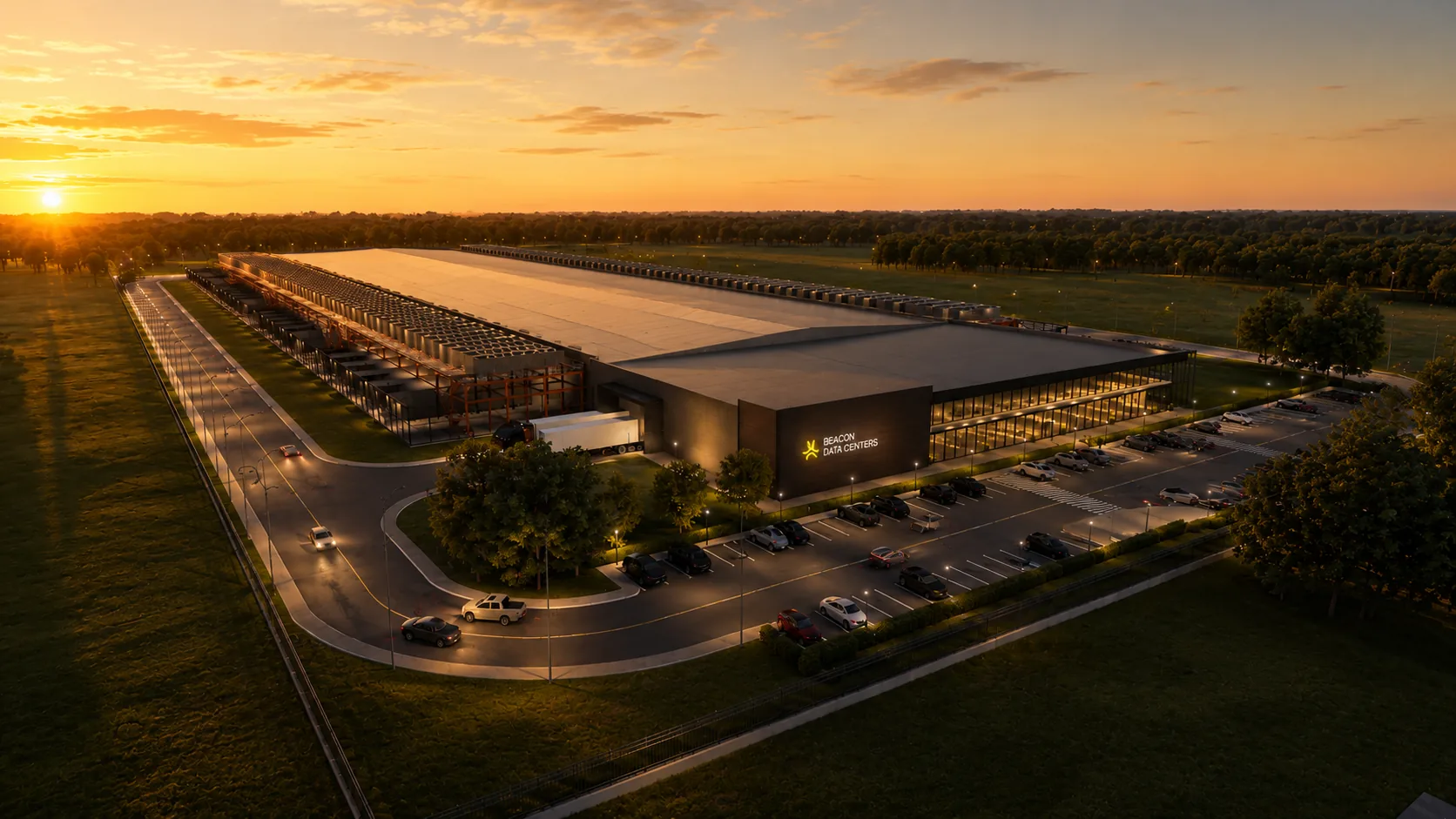
Calvert Infrastructure Hub hero rendering

Beacon Data Centers

Calvert Infrastructure Hub

Mobile County, Alabama

1,000 Construction Jobs
250 Quality Operational Jobs
95 Acres Developed
2027 First Building Completed
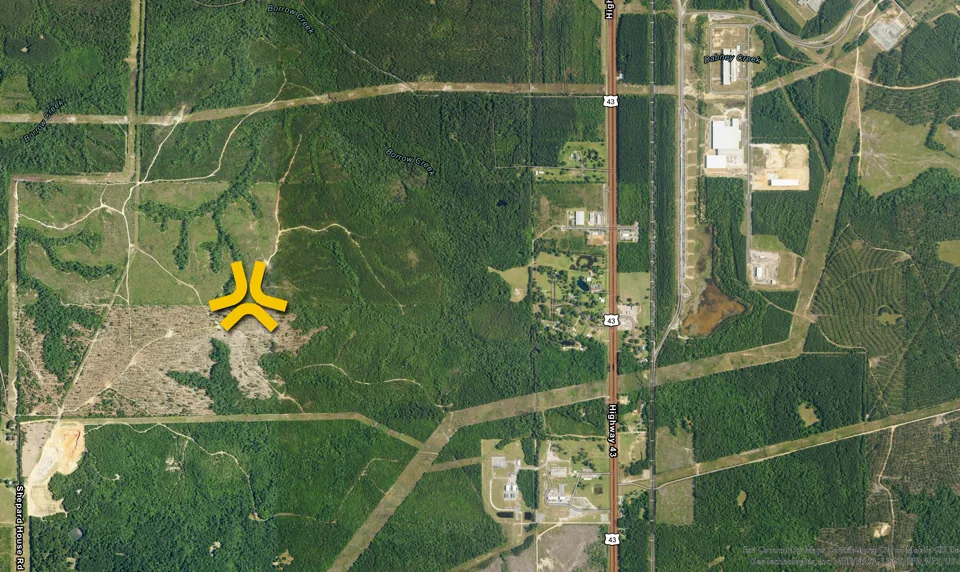
Site map showing the Calvert Infrastructure Hub location in Mobile County, Alabama

Calvert Infrastructure Hub is a next-generation data center development planned in Calvert, Alabama. A 95 acre development out of a 650 acre lot between Highway 43 and Shepard House Road, the project represents a major long-term investment in the region, bringing high-quality jobs, infrastructure development, and new economic opportunity to the Gulf Coast while strengthening Alabama's role in the future of advanced technology infrastructure.

About the site

Calvert was selected for its rare combination of available land, energy, and workforce. This project is designed to use no more water than a small office building.

Land

The site is in an industrial area. Its current use is managed timberland with substantial setbacks from the nearest residential areas. The site is made up of 650 acres, with less than 15% of the site planned for development. The vast majority of the property will remain undisturbed, preserving existing tree cover and natural buffers.

Power

The campus is positioned within Alabama Power's transmission backbone. Alabama Power will service the site using high voltage power lines they already own. Alabama Power confirms that the energy this development needs already exists on their lines, and the project will pay for it. Alabama Power confirms that this project will not impact community energy bills. The site will pay for the power it needs directly to Alabama Power. The project will pay for any extensions of Alabama Power's transmission lines along existing rights-of-way. No new power lines will go through the community.

Access

Beacon is engaged with ALDOT on design and permitting for a new primary site access from Highway 43, with secondary access from Shepard House Road. The cost of constructing a new access will be funded entirely by the project.

Workforce

This development will employ up to 1,000 construction workers at peak construction, and 250 staff for operations. Operational jobs require diverse skill sets. Jobs include but are not limited to: Site and Facilities Managers, Server, HVAC, and Facilities Technicians, Security, Food Service, Janitorial, and many more roles.

Water

The site will utilize a closed-loop water system. Evaporative cooling will not be used. South Alabama Utilities has confirmed availability of 7,500 gallons of public water usage and 7,500 gallons of sewer usage per day. This allocation is intended primarily for employee facilities, such as restrooms, sinks, etc., and is comparable to the water demand of a small office building with approximately 250 employees.
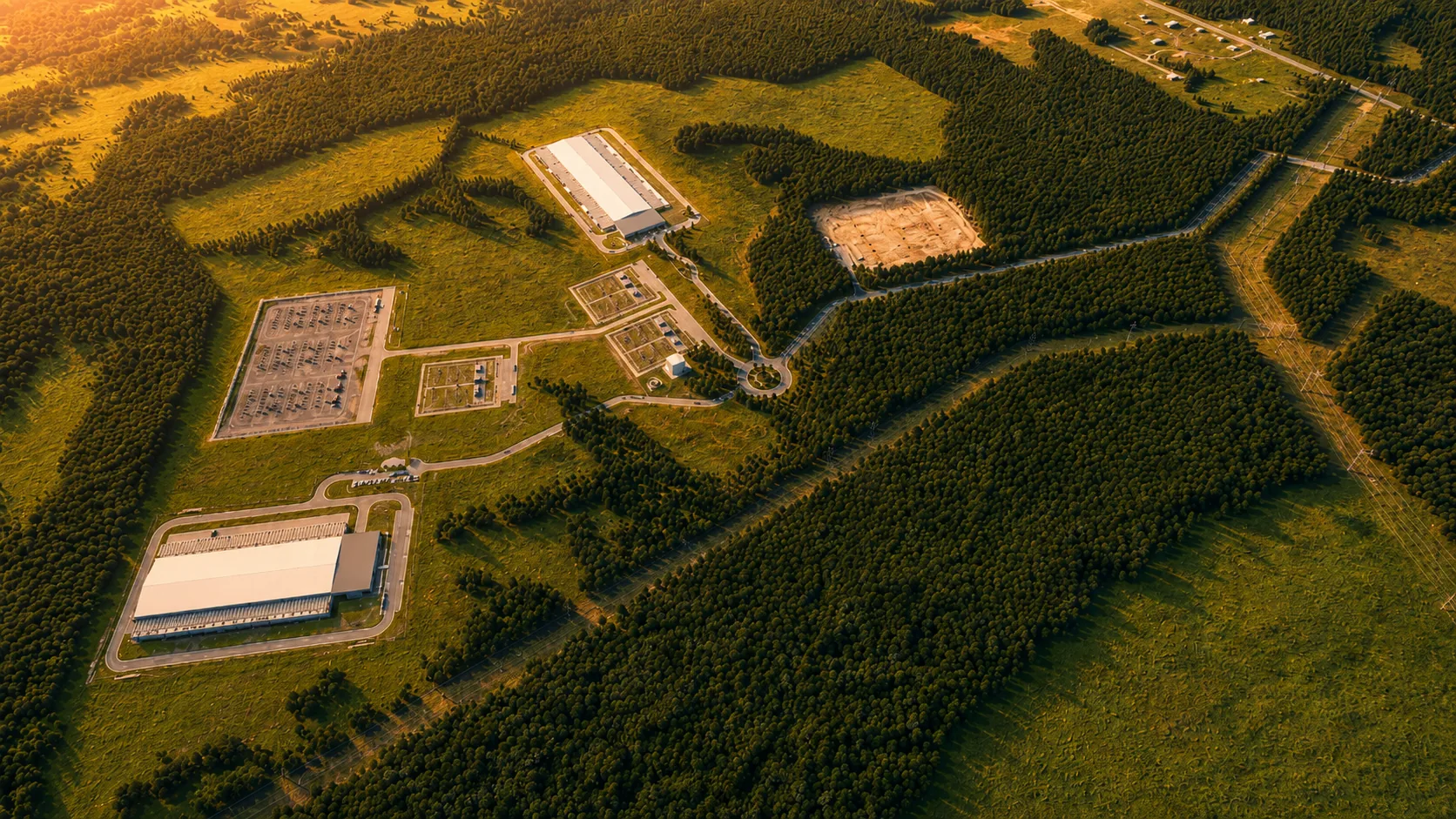
Designed around the land

Master plan view of the Calvert Infrastructure Hub campus

The campus is sited on less than 15% of the property, with substantial setbacks on all sides and natural buffers preserved across the remaining acreage.

Responsible Development

Wetlands

The project team is working with all relevant government authorities to minimize wetlands impact. A "waters of the U.S." delineation is underway to ensure the final site plan limits wetland disturbance. Through ongoing design refinement, Phase 1 wetland impact has been reduced to less than half an acre across a 650-acre parcel, roughly 0.0007% of the property.

Floodplain

565 acres of developable ground, 88% of the property, is outside floodplain limits and has an elevation above the flood elevation. The site access road from Highway 43 traverses a portion of the floodplain. The road will be designed and permitted with the County and FEMA to be above floodplain elevation.

Emissions

The site is designed without backup diesel generators. As a result, there are no on-site emissions, smoke, or engine noise.

Cultural Resources

No historic resources (structures, buildings, cemeteries) have been recorded on the site, adjacent to the site, or within 0.5 miles of the project boundaries.

Noise

Project design incorporates a minimum 1,000-foot setback between critical equipment and site boundaries. Worst-case calculations predict noise at the property lines well below the allowable limit of 65 decibels. The resulting levels are comparable to the noise of a household refrigerator. Final equipment selection will ensure continued compliance.

Land

650 acres of wooded property, with less than 15% of the site planned for development. The vast majority of the property will remain undisturbed, preserving existing tree cover and natural buffers. 565 acres of developable ground, 88% of the property, sit well above floodplain elevation. Primary access from Highway 43, with secondary access from Shepard House Road, an existing construction route.

Permitting

Our permitting strategy is built on transparency and responsibility. We are working to meet or exceed all local, state, and federal regulations, and engaging early with agencies, utilities, and stakeholders. That means working closely with local leaders, state agencies, utility providers, and community members throughout the permitting process to make sure concerns are heard and requirements are met. We believe in being upfront, accessible, and respectful of the land, the people, and the surrounding area as development moves forward.
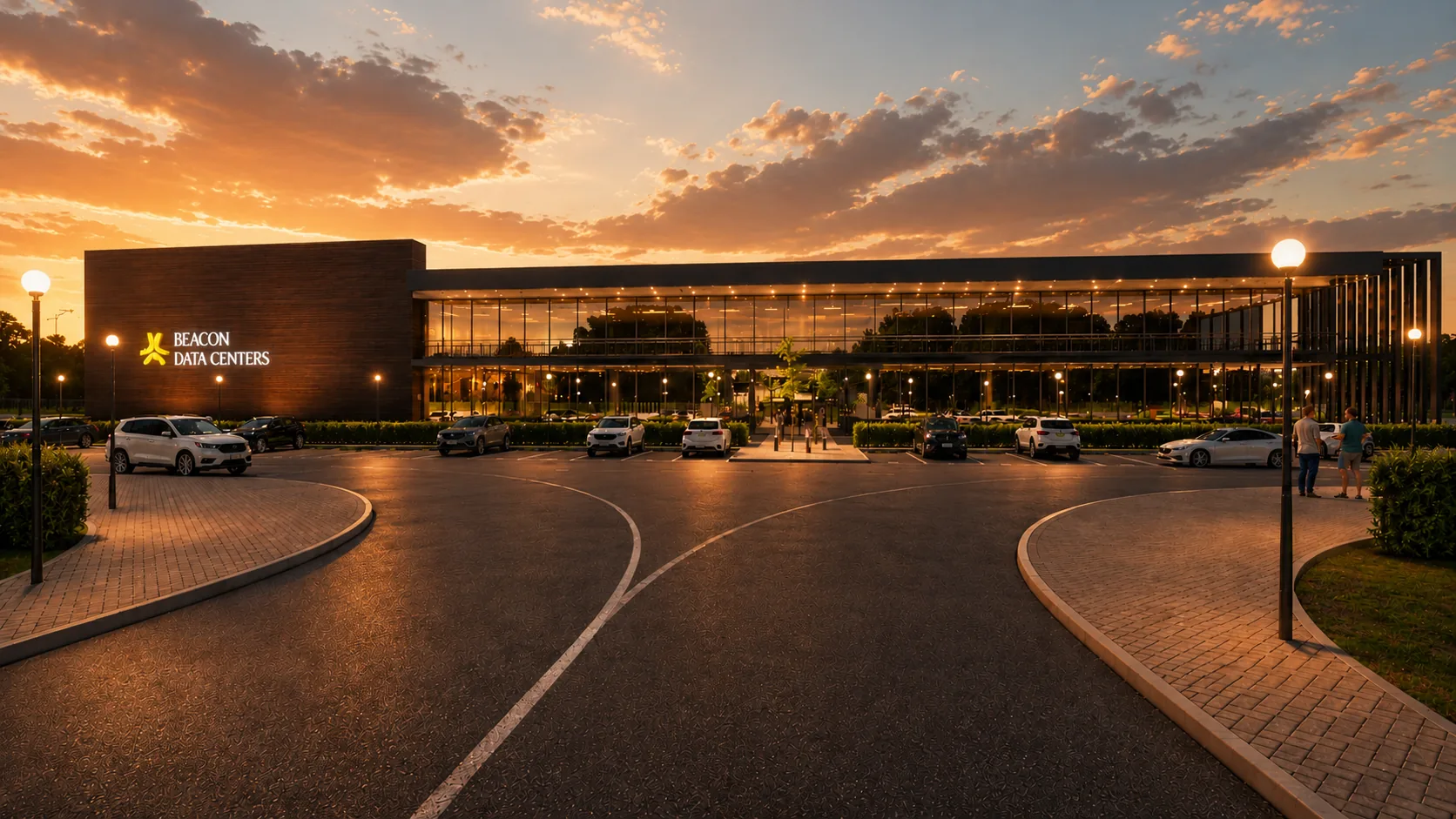
Campus perspectives

Rendering 01, building perspective, main entrance Rendering 01, building perspective, main entrance
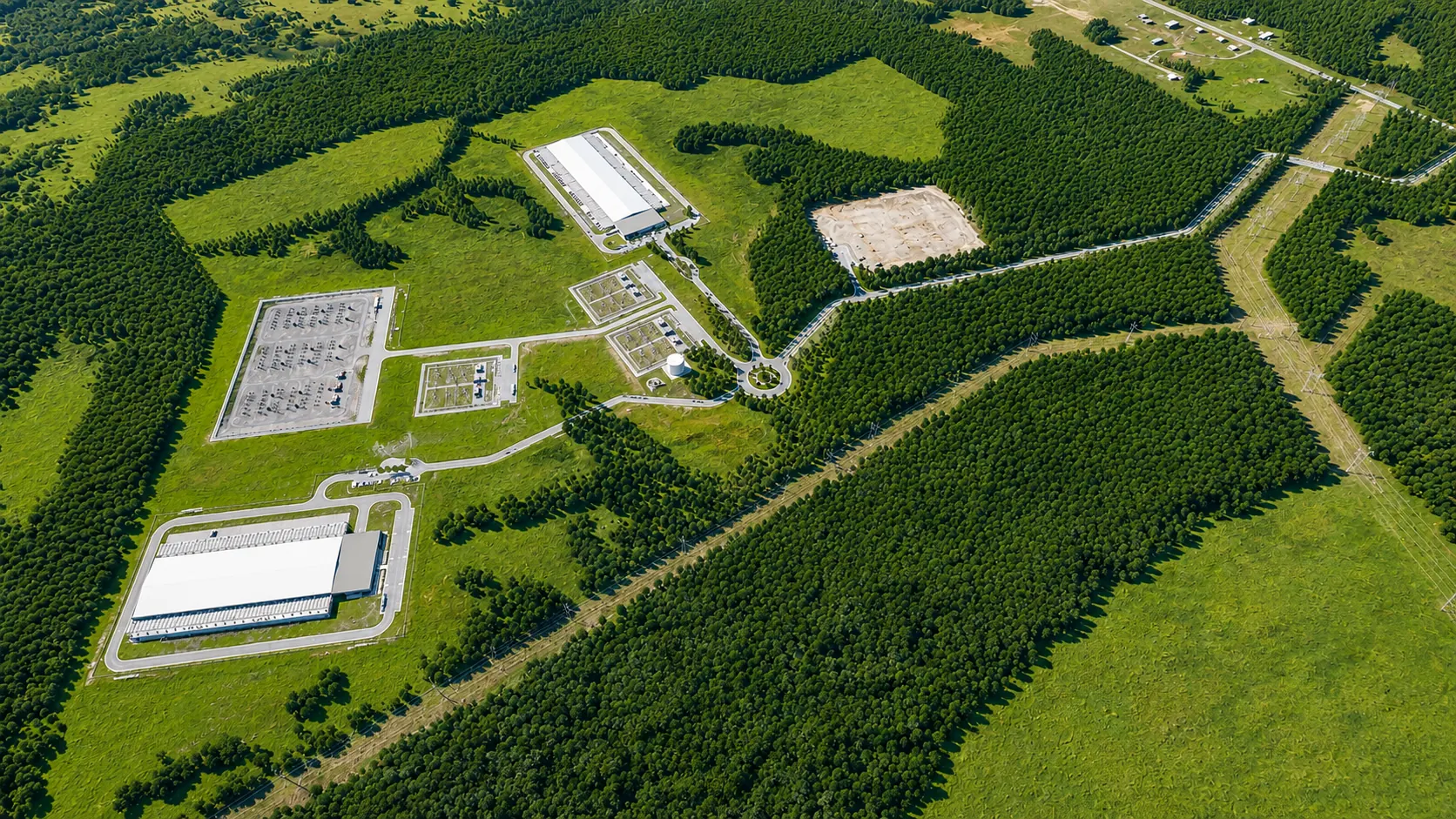
Rendering 02, building perspective, campus streetscape Rendering 02, building perspective, campus streetscape
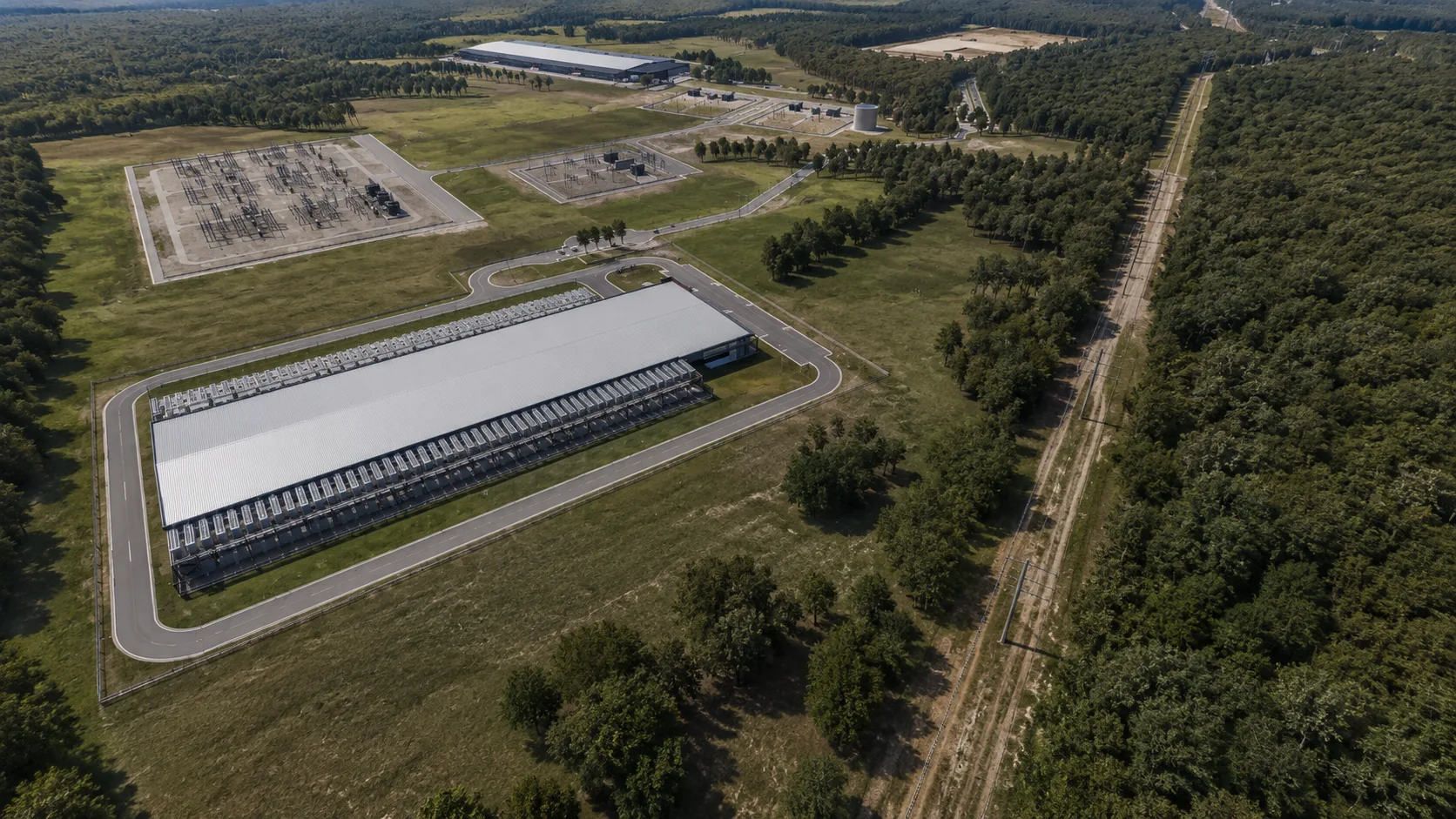
Rendering 03, building perspective, aerial view Rendering 03, building perspective, aerial view
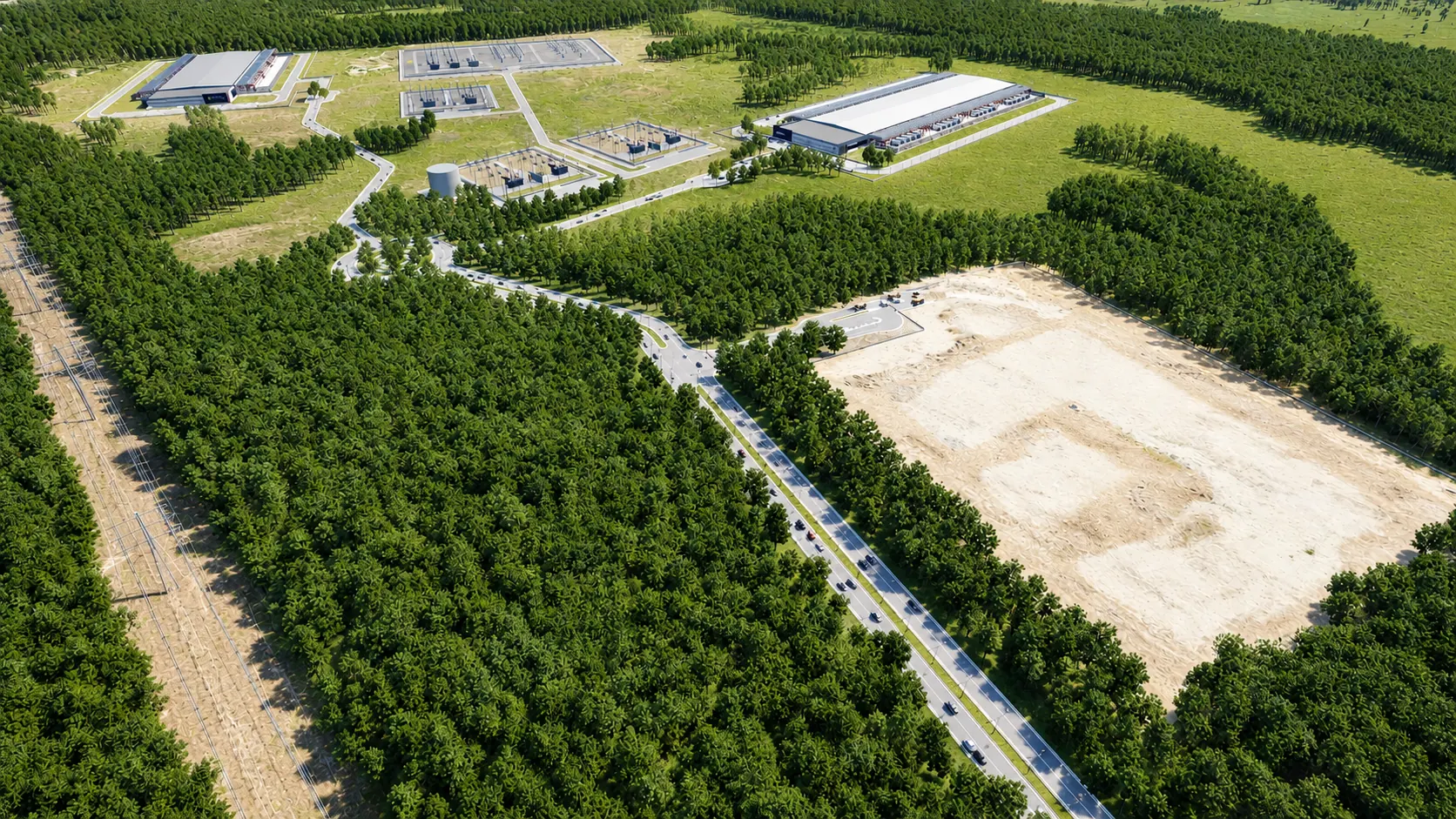
Rendering 04, building perspective, site entrance approach Rendering 04, building perspective, site entrance approach

Economic Impact

This project is designed as a long-term economic asset for the region. Expected benefits include:

  • Significant infrastructure investment (roads, drainage, utilities)
  • Multi-year construction activity
  • Long-term operations and maintenance jobs
  • Local hiring and supplier opportunities
  • Increased property and local tax revenue
  • Community investment initiatives for priority local infrastructure or non-profits as identified by the community
  • Partnerships with training institutions and post-secondaries, to prioritize local workforce participation

Specifically, the project is expected to support up to 1,000 construction jobs at peak and 250 permanent operating roles, with an average salary of $115,000.

Mobile, Alabama

Community FAQ

About the Project
What is the Calvert Infrastructure Hub?

The Calvert Infrastructure Hub is a proposed data center development in Calvert, Alabama, located in northern Mobile County. The campus is designed to support cloud computing, artificial intelligence, digital communications, and the infrastructure that powers modern online services.

The project is being designed as long-term infrastructure that combines energy, connectivity, and industrial development in one location to support reliable and scalable operations.

Where is the project located?

The proposed campus is located in Calvert, Alabama, between Highway 43 and Shepard House Road. The project is located in an industrial corridor and will be set back a minimum of 1,000 feet from the property line on all sides.

What is planned for the site?

Plans include:

  • Roughly 95 acres of campus development, situated in the middle of a 650-acre site. Less than 15% of the site is planned for development.
  • Two data center buildings and supporting infrastructure
  • Temporary construction staging areas

The site has been designed to consolidate infrastructure within a carefully planned industrial campus while maintaining setbacks, buffers, and environmental protections.

Why was Calvert selected?

Data centers require a unique combination of land, infrastructure, energy access, and connectivity. Calvert was selected because it offers:

  • Available industrial land with compatible surrounding uses
  • Close connectivity to sufficient power sources
  • A strong regional workforce with industrial experience

Taken together, these characteristics make Calvert well-suited for long-term digital infrastructure investment.

Site Planning and Environmental Review
What environmental studies have been completed?

A range of technical studies and reviews are underway or completed to evaluate the site's suitability for development. These include:

  • Wetlands and environmental assessments
  • Floodplain review and drainage analysis
  • Cultural and historical resource evaluations
  • Protected species studies
  • Noise analysis
  • Water and sewer infrastructure review
  • Power and utility assessments
  • Geotechnical and land suitability analysis
  • Permitting and regulatory review

Studies completed to date indicate the site is suitable for industrial and data center development with standard mitigation and permitting measures.

Will wetlands or environmentally sensitive areas be protected?

Yes. The project is being designed around existing environmental features where possible. Wetland areas, drainage corridors, and natural buffers are being incorporated into site planning and reviewed through applicable state and federal permitting processes.

Through ongoing design refinement, the project team has reduced potential Phase 1 wetland impact to less than half an acre across a 650-acre parcel, roughly 0.0007% of the property.

In addition, protected species surveys indicate no prevalence of protected species on the site. Completion of endangered species survey indicated presence of gopher tortoises. A mitigation plan is currently being coordinated with USFWS for the safe relocation of gopher tortoises found on the site to a nearby sanctuary.

Are there impacts to historic structures?

No. No historic structures, including buildings or cemeteries, have been recorded on the site, adjacent to the site, or within 0.5 miles of the project boundaries.

Will the project affect flood risk?

No. Floodplain and drainage studies are being conducted as part of project planning. 565 acres of developable ground, 88% of the property, is outside floodplain limits and has an elevation well above the flood elevation. The site access road from Highway 43 traverses a portion of the floodplain. The road will be designed and permitted with Mobile County, ALDOT, and FEMA to be above floodplain elevation.

Stormwater systems and drainage infrastructure will be designed to meet regulatory requirements and protect surrounding properties and waterways.

Economic Impact and Community Benefits
What is the initial investment value?

The initial construction cost is estimated to be $6 billion.

How will the local community benefit?

The Calvert Infrastructure Hub is expected to provide long-term economic benefits to Mobile County and the surrounding region.

In addition to tax revenue, potential benefits include:

  • Significant private infrastructure investment
  • Multi-year construction activity
  • Long-term operational employment opportunities
  • Increased demand for local suppliers and service providers
  • Expanded local tax base
  • Infrastructure improvements supporting future economic growth
  • Workforce development and training partnerships
How many jobs will the project create?

The construction phase will create roughly 1,000 jobs in construction and supporting industries.

Once operational, the data center will have roughly 250 permanent jobs, with an average salary of $115,000. Operational jobs require diverse skill sets. Jobs include but are not limited to: Site and Facilities Managers, Server/HVAC/Facilities Technicians, and Security, as well as ancillary jobs like janitorial, landscaping, and more.

Will local businesses have opportunities to participate?

Yes. The project team has been working with and will continue to work with local contractors, suppliers, workforce programs, and regional businesses wherever practical throughout construction and operations.

Will these jobs go to locals?

Yes. In addition to Beacon's commitment to hiring local contractors and construction-related firms, project requirements for facility response times require most jobs to be located within the community.

Will Beacon work with the community on development efforts?

Yes. As part of its commitment to community, Beacon has been and will continue to engage with the community on potential benefit programs or ways to support key initiatives.

Power and Water Use
How will the project be powered?

The Calvert Technology Park is located near existing electrical infrastructure, which makes the site well-suited for this type of development. The project will pay for all energy and infrastructure needed to serve its operations, including any upgrades or extensions to connect the facility to the grid. These investments are funded by the project, not by local residents or existing utility customers.

Any new infrastructure will be built within existing utility easements. No new power lines will be routed through the surrounding community.

Will the project affect the local power grid?

The project is designed to integrate with the existing electrical grid in the area. The project team is working with the local electric provider to ensure the facility is served reliably without disruption to the surrounding community.

Will local utility costs increase?

The project is structured so that local residents' energy bills are not affected by this development. The project pays for the energy and infrastructure needed to serve its operations. This cost structure is part of the project's agreement and is subject to state regulatory oversight.

How will the project use water?

The project uses a closed-loop system, meaning the water used for cooling the processors is recycled within the data center. Evaporative cooling will not be used.

How much water will the project use?

The project will use approximately 7,500 gallons of water and sewer per day, roughly comparable to a small office building with 250 employees.

Will the project impact local water supplies or costs?

No. South Alabama Utilities has confirmed availability of 7,500 gallons of water and sewer usage per day.

Traffic and Transportation
Will traffic increase?

Beacon is coordinating with ALDOT and Mobile County on potential traffic to minimize impact to locals. Traffic levels are expected to increase during construction periods. To manage this:

  • Construction access routes will be planned carefully
  • Coordination with state and local transportation agencies will continue
  • Road improvements may be phased alongside development
  • Traffic studies will help identify mitigation measures where necessary

Operational traffic after construction is expected to be significantly lower than construction activity levels.

Noise and Operations
Will the campus be noisy?

No. This project does not have diesel power generators, which are the main driver of noise from other data centers. Worst-case calculations project noise at the property lines well below the allowable limit of 65 dB. The resulting levels are comparable to the noise of a household refrigerator or a quiet library.

In addition, the project design incorporates a minimum 1,000-foot setback from the property line and includes numerous buffers, further reducing noise levels for neighbors.

Will the campus operate continuously?

Yes. Data centers operate continuously to support critical digital services and infrastructure. It will be staffed 24/7.

Will there be emissions?

No. Since the project is designed without backup diesel generators, there are no on-site emissions, no exhaust, and no engine noise.

Community Engagement
What stage is the project currently in?

The project is currently in the planning, engineering, and community engagement phase.

Ongoing activities include:

  • Technical and environmental studies
  • Infrastructure and utility coordination
  • Regulatory and permitting review
  • Site planning and design refinement
  • Community outreach and stakeholder engagement
How can the public participate?

Community feedback is encouraged throughout the planning process. Public input can help inform:

  • Site design
  • Infrastructure planning
  • Mitigation measures
  • Community priorities and partnerships

Additional public engagement opportunities and updates are expected as the project progresses.

What is the long-term vision for the project?

The Calvert Infrastructure Hub is intended to serve as long-term digital infrastructure investment for Mobile County and the Gulf Coast region.

The project team's approach is to:

  • Engage with the community early and consistently
  • Coordinate closely with local stakeholders and agencies
  • Invest in long-term infrastructure improvements
  • Support workforce and economic development
  • Build responsibly and sustainably

Have additional questions? Email us at calvert@beacondatacenters.com

Calvert Infrastructure Hub | Beacon Data Centers
Calvert Infrastructure Hub hero rendering

Beacon Data Centers

Calvert Infrastructure Hub

Mobile County, Alabama

1,000 Construction Jobs
250 Quality Operational Jobs
95 Acres Developed
2027 First Building Completed
Site map showing the Calvert Infrastructure Hub location in Mobile County, Alabama

Calvert Infrastructure Hub is a next-generation data center development planned in Calvert, Alabama. A 95 acre development out of a 650 acre lot between Highway 43 and Shepard House Road, the project represents a major long-term investment in the region, bringing high-quality jobs, infrastructure development, and new economic opportunity to the Gulf Coast while strengthening Alabama's role in the future of advanced technology infrastructure.

About the site

Calvert was selected for its rare combination of available land, energy, and workforce. This project is designed to use no more water than a small office building.

Land

The site is in an industrial area. Its current use is managed timberland with substantial setbacks from the nearest residential areas. The site is made up of 650 acres, with less than 15% of the site planned for development. The vast majority of the property will remain undisturbed, preserving existing tree cover and natural buffers.

Power

The campus is positioned within Alabama Power's transmission backbone. Alabama Power will service the site using high voltage power lines they already own. Alabama Power confirms that the energy this development needs already exists on their lines, and the project will pay for it. Alabama Power confirms that this project will not impact community energy bills. The site will pay for the power it needs directly to Alabama Power. The project will pay for any extensions of Alabama Power's transmission lines along existing rights-of-way. No new power lines will go through the community.

Access

Beacon is engaged with ALDOT on design and permitting for a new primary site access from Highway 43, with secondary access from Shepard House Road. The cost of constructing a new access will be funded entirely by the project.

Workforce

This development will employ up to 1,000 construction workers at peak construction, and 250 staff for operations. Operational jobs require diverse skill sets. Jobs include but are not limited to: Site and Facilities Managers, Server, HVAC, and Facilities Technicians, Security, Food Service, Janitorial, and many more roles.

Water

The site will utilize a closed-loop water system. Evaporative cooling will not be used. South Alabama Utilities has confirmed availability of 7,500 gallons of public water usage and 7,500 gallons of sewer usage per day. This allocation is intended primarily for employee facilities, such as restrooms, sinks, etc., and is comparable to the water demand of a small office building with approximately 250 employees.

Responsible Development

Wetlands

The project team is working with all relevant government authorities to minimize wetlands impact. A "waters of the U.S." delineation is underway to ensure the final site plan limits wetland disturbance. Through ongoing design refinement, Phase 1 wetland impact has been reduced to less than half an acre across a 650-acre parcel, roughly 0.0007% of the property.

Floodplain

565 acres of developable ground, 88% of the property, is outside floodplain limits and has an elevation above the flood elevation. The site access road from Highway 43 traverses a portion of the floodplain. The road will be designed and permitted with the County and FEMA to be above floodplain elevation.

Emissions

The site is designed without backup diesel generators. As a result, there are no on-site emissions, smoke, or engine noise.

Cultural Resources

No historic resources (structures, buildings, cemeteries) have been recorded on the site, adjacent to the site, or within 0.5 miles of the project boundaries.

Noise

Project design incorporates a minimum 1,000-foot setback between critical equipment and site boundaries. Worst-case calculations predict noise at the property lines well below the allowable limit of 65 decibels. The resulting levels are comparable to the noise of a household refrigerator. Final equipment selection will ensure continued compliance.

Land

650 acres of wooded property, with less than 15% of the site planned for development. The vast majority of the property will remain undisturbed, preserving existing tree cover and natural buffers. 565 acres of developable ground, 88% of the property, sit well above floodplain elevation. Primary access from Highway 43, with secondary access from Shepard House Road, an existing construction route.

Permitting

Our permitting strategy is built on transparency and responsibility. We are working to meet or exceed all local, state, and federal regulations, and engaging early with agencies, utilities, and stakeholders. That means working closely with local leaders, state agencies, utility providers, and community members throughout the permitting process to make sure concerns are heard and requirements are met. We believe in being upfront, accessible, and respectful of the land, the people, and the surrounding area as development moves forward.

Designed around the land.

Master plan view of the Calvert Infrastructure Hub campus

The campus is sited on less than 15% of the property, with substantial setbacks on all sides and natural buffers preserved across the remaining acreage.

Campus perspectives

Rendering 01, building perspective, main entrance Rendering 01, building perspective, main entrance
Rendering 02, building perspective, campus streetscape Rendering 02, building perspective, campus streetscape
Rendering 03, building perspective, aerial view Rendering 03, building perspective, aerial view
Rendering 04, building perspective, site entrance approach Rendering 04, building perspective, site entrance approach

Economic Impact

This project is designed as a long-term economic asset for the region. Expected benefits include:

  • Significant infrastructure investment (roads, drainage, utilities)
  • Multi-year construction activity
  • Long-term operations and maintenance jobs
  • Local hiring and supplier opportunities
  • Increased property and local tax revenue
  • Community investment initiatives for priority local infrastructure or non-profits as identified by the community
  • Partnerships with training institutions and post-secondaries, to prioritize local workforce participation

Specifically, the project is expected to support up to 1,000 construction jobs at peak and 250 permanent operating roles, with an average salary of $115,000.

Mobile, Alabama

Community FAQ

About the Project
What is the Calvert Infrastructure Hub?

The Calvert Infrastructure Hub is a proposed data center development in Calvert, Alabama, located in northern Mobile County. The campus is designed to support cloud computing, artificial intelligence, digital communications, and the infrastructure that powers modern online services.

The project is being designed as long-term infrastructure that combines energy, connectivity, and industrial development in one location to support reliable and scalable operations.

Where is the project located?

The proposed campus is located in Calvert, Alabama, between Highway 43 and Shepard House Road. The project is located in an industrial corridor and will be set back a minimum of 1,000 feet from the property line on all sides.

What is planned for the site?

Plans include:

  • Roughly 95 acres of campus development, situated in the middle of a 650-acre site. Less than 15% of the site is planned for development.
  • Two data center buildings and supporting infrastructure
  • Temporary construction staging areas

The site has been designed to consolidate infrastructure within a carefully planned industrial campus while maintaining setbacks, buffers, and environmental protections.

Why was Calvert selected?

Data centers require a unique combination of land, infrastructure, energy access, and connectivity. Calvert was selected because it offers:

  • Available industrial land with compatible surrounding uses
  • Close connectivity to sufficient power sources
  • A strong regional workforce with industrial experience

Taken together, these characteristics make Calvert well-suited for long-term digital infrastructure investment.

Site Planning and Environmental Review
What environmental studies have been completed?

A range of technical studies and reviews are underway or completed to evaluate the site's suitability for development. These include:

  • Wetlands and environmental assessments
  • Floodplain review and drainage analysis
  • Cultural and historical resource evaluations
  • Protected species studies
  • Noise analysis
  • Water and sewer infrastructure review
  • Power and utility assessments
  • Geotechnical and land suitability analysis
  • Permitting and regulatory review

Studies completed to date indicate the site is suitable for industrial and data center development with standard mitigation and permitting measures.

Will wetlands or environmentally sensitive areas be protected?

Yes. The project is being designed around existing environmental features where possible. Wetland areas, drainage corridors, and natural buffers are being incorporated into site planning and reviewed through applicable state and federal permitting processes.

Through ongoing design refinement, the project team has reduced potential Phase 1 wetland impact to less than half an acre across a 650-acre parcel, roughly 0.0007% of the property.

In addition, protected species surveys indicate no prevalence of protected species on the site. Completion of endangered species survey indicated presence of gopher tortoises. A mitigation plan is currently being coordinated with USFWS for the safe relocation of gopher tortoises found on the site to a nearby sanctuary.

Are there impacts to historic structures?

No. No historic structures, including buildings or cemeteries, have been recorded on the site, adjacent to the site, or within 0.5 miles of the project boundaries.

Will the project affect flood risk?

No. Floodplain and drainage studies are being conducted as part of project planning. 565 acres of developable ground, 88% of the property, is outside floodplain limits and has an elevation well above the flood elevation. The site access road from Highway 43 traverses a portion of the floodplain. The road will be designed and permitted with Mobile County, ALDOT, and FEMA to be above floodplain elevation.

Stormwater systems and drainage infrastructure will be designed to meet regulatory requirements and protect surrounding properties and waterways.

Economic Impact and Community Benefits
What is the initial investment value?

The initial construction cost is estimated to be $6 billion.

How will the local community benefit?

The Calvert Infrastructure Hub is expected to provide long-term economic benefits to Mobile County and the surrounding region.

In addition to tax revenue, potential benefits include:

  • Significant private infrastructure investment
  • Multi-year construction activity
  • Long-term operational employment opportunities
  • Increased demand for local suppliers and service providers
  • Expanded local tax base
  • Infrastructure improvements supporting future economic growth
  • Workforce development and training partnerships
How many jobs will the project create?

The construction phase will create roughly 1,000 jobs in construction and supporting industries.

Once operational, the data center will have roughly 250 permanent jobs, with an average salary of $115,000. Operational jobs require diverse skill sets. Jobs include but are not limited to: Site and Facilities Managers, Server/HVAC/Facilities Technicians, and Security, as well as ancillary jobs like janitorial, landscaping, and more.

Will local businesses have opportunities to participate?

Yes. The project team has been working with and will continue to work with local contractors, suppliers, workforce programs, and regional businesses wherever practical throughout construction and operations.

Will these jobs go to locals?

Yes. In addition to Beacon's commitment to hiring local contractors and construction-related firms, project requirements for facility response times require most jobs to be located within the community.

Will Beacon work with the community on development efforts?

Yes. As part of its commitment to community, Beacon has been and will continue to engage with the community on potential benefit programs or ways to support key initiatives.

Power and Water Use
How will the project be powered?

The Calvert Technology Park is located near existing electrical infrastructure, which makes the site well-suited for this type of development. The project will pay for all energy and infrastructure needed to serve its operations, including any upgrades or extensions to connect the facility to the grid. These investments are funded by the project, not by local residents or existing utility customers.

Any new infrastructure will be built within existing utility easements. No new power lines will be routed through the surrounding community.

Will the project affect the local power grid?

The project is designed to integrate with the existing electrical grid in the area. The project team is working with the local electric provider to ensure the facility is served reliably without disruption to the surrounding community.

Will local utility costs increase?

The project is structured so that local residents' energy bills are not affected by this development. The project pays for the energy and infrastructure needed to serve its operations. This cost structure is part of the project's agreement and is subject to state regulatory oversight.

How will the project use water?

The project uses a closed-loop system, meaning the water used for cooling the processors is recycled within the data center. Evaporative cooling will not be used.

How much water will the project use?

The project will use approximately 7,500 gallons of water and sewer per day, roughly comparable to a small office building with 250 employees.

Will the project impact local water supplies or costs?

No. South Alabama Utilities has confirmed availability of 7,500 gallons of water and sewer usage per day.

Traffic and Transportation
Will traffic increase?

Beacon is coordinating with ALDOT and Mobile County on potential traffic to minimize impact to locals. Traffic levels are expected to increase during construction periods. To manage this:

  • Construction access routes will be planned carefully
  • Coordination with state and local transportation agencies will continue
  • Road improvements may be phased alongside development
  • Traffic studies will help identify mitigation measures where necessary

Operational traffic after construction is expected to be significantly lower than construction activity levels.

Noise and Operations
Will the campus be noisy?

No. This project does not have diesel power generators, which are the main driver of noise from other data centers. Worst-case calculations project noise at the property lines well below the allowable limit of 65 dB. The resulting levels are comparable to the noise of a household refrigerator or a quiet library.

In addition, the project design incorporates a minimum 1,000-foot setback from the property line and includes numerous buffers, further reducing noise levels for neighbors.

Will the campus operate continuously?

Yes. Data centers operate continuously to support critical digital services and infrastructure. It will be staffed 24/7.

Will there be emissions?

No. Since the project is designed without backup diesel generators, there are no on-site emissions, no exhaust, and no engine noise.

Community Engagement
What stage is the project currently in?

The project is currently in the planning, engineering, and community engagement phase.

Ongoing activities include:

  • Technical and environmental studies
  • Infrastructure and utility coordination
  • Regulatory and permitting review
  • Site planning and design refinement
  • Community outreach and stakeholder engagement
How can the public participate?

Community feedback is encouraged throughout the planning process. Public input can help inform:

  • Site design
  • Infrastructure planning
  • Mitigation measures
  • Community priorities and partnerships

Additional public engagement opportunities and updates are expected as the project progresses.

What is the long-term vision for the project?

The Calvert Infrastructure Hub is intended to serve as long-term digital infrastructure investment for Mobile County and the Gulf Coast region.

The project team's approach is to:

  • Engage with the community early and consistently
  • Coordinate closely with local stakeholders and agencies
  • Invest in long-term infrastructure improvements
  • Support workforce and economic development
  • Build responsibly and sustainably

Have additional questions? Email us at calvert@beacondatacenters.com